
Read the diagram as text
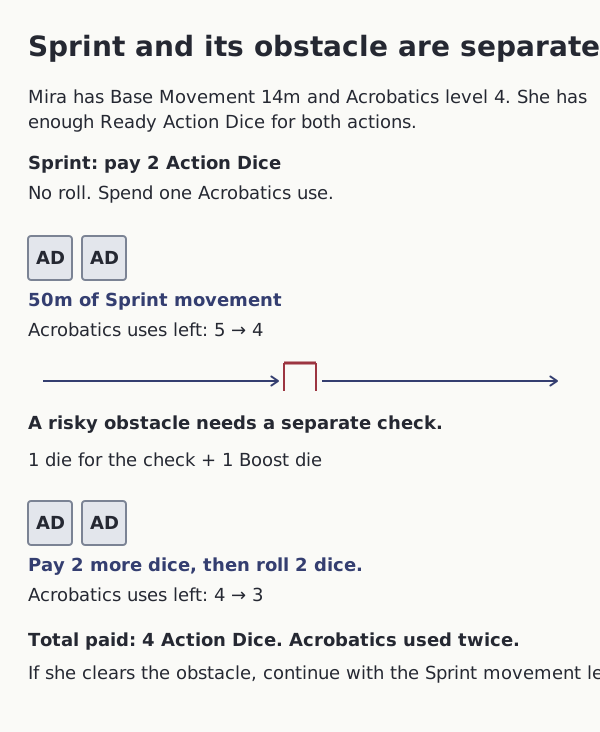
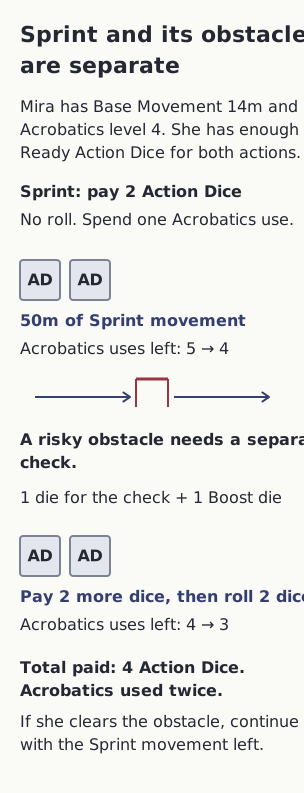
Mira has Base Movement 14m and Acrobatics level 4. She has enough Ready AD to pay for both actions. This agile route uses Acrobatics for Sprint.
- Calculate Sprint using Base Movement 14 and Acrobatics level 4: (14 × 3) + (4 × 2) = 50m.
- Pay 2 AD and spend one proactive Acrobatics use to Sprint. Do not roll. Five Acrobatics uses become four.
- At the genuinely uncertain obstacle, hear the Guide’s stakes before committing. Pay one AD for the check plus one legal Boost AD: two more AD, rolling two dice.
- Spend another Acrobatics use, leaving three. This obstacle roll decides whether Mira clears it, not her Sprint distance.
- On success, continue with the Sprint movement still left. Failure applies the established consequence without a refund or a new allowance.
Result: Sprint’s payment does not pay for the obstacle roll. The two actions have separate costs and separate Skill uses.
- Apply normal discounts and payment modifiers. A voluntary risky manoeuvre needs Ready AD and a remaining proactive use of the Skill it tests; it is a Major Action unless a specific rule says otherwise.
- The Sprint Skill and obstacle Skill can differ when the methods differ. Each uses its own remaining-use count. Walk and Run do not themselves spend a proactive Skill use.
- Failure may stop movement or cause the established consequence. It does not refund Sprint, turn it into Run or grant fresh movement.