
Read the diagram as text
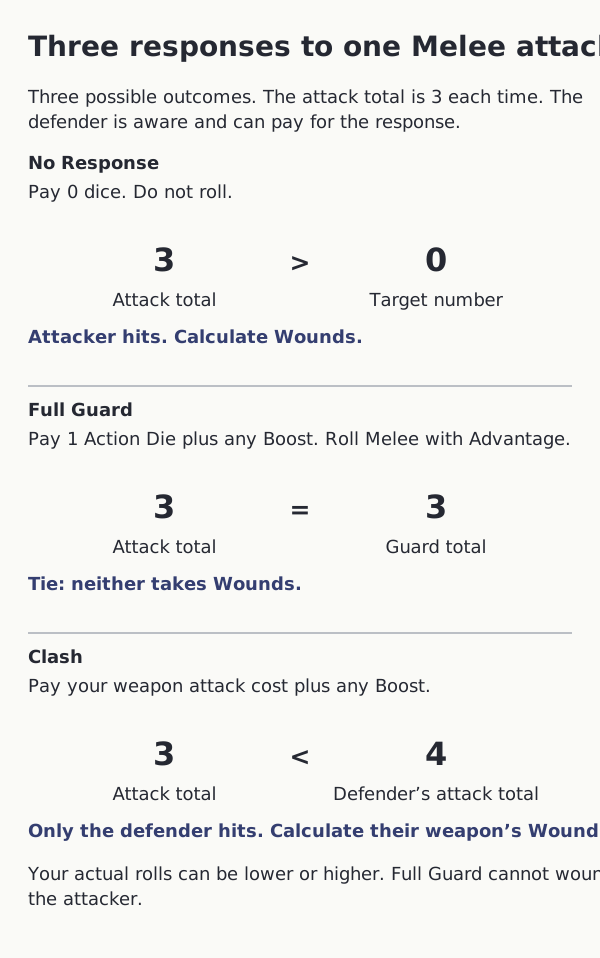
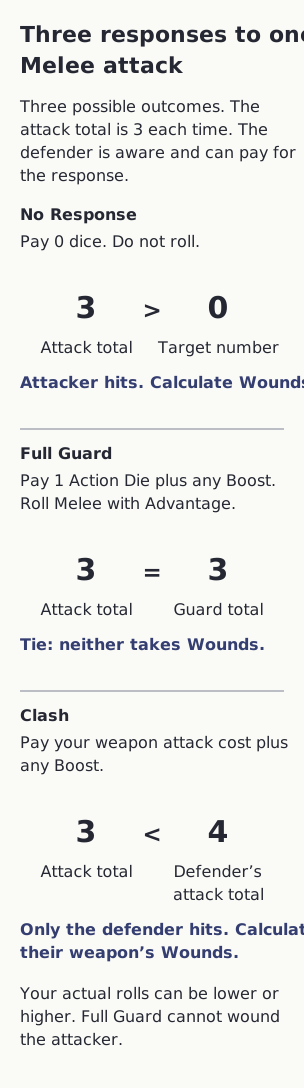
Three possible outcomes. The attacker’s total is 3 in each example. Your roll can be lower or higher. The defender is aware and can make and pay for the chosen response.
- No Response costs zero and rolls nothing. Attack total 3 beats target number 0, so the attacker hits and calculates Wounds.
- Full Guard against Melee uses Melee with Advantage. Its example total 3 ties the attacker’s 3, stopping the attack. It cannot wound the attacker.
- A legal Clash pays for the defender’s own weapon attack plus any Boost. The example defender’s attack total 4 beats 3 by one. Only the defender hits and calculates their own weapon’s Wounds.
- Use the actual final totals in play. Neither guard total 3 nor Clash total 4 is guaranteed by choosing that response.
Result: A tied Full Guard causes no Wounds to either character. Clash’s illustrated 4 is a sample result, not a promised benefit.
- Apply each defender’s own discounts, cost modifiers, weapon reach and other attack requirements. An unaware defender follows No Response.
- Against a Ranged attack, Full Guard uses Acrobatics and weapon Clash uses Ranged. Their specific legality rules still apply.
- Exchange Responses are separate from Reactions and do not use a proactive Skill use or your own turn. Do not add a separate resistance roll.